
Most people know WordPress, Drupal, or Joomla as content management systems, but when your world revolves around videos, audio, images, or large media libraries, a standard CMS quickly becomes limiting. Media-heavy platforms need features like transcoding, adaptive streaming, playlists, metadata, and dedicated workflows that handle large files gracefully.
This is where Media CMS platforms come in. They’re built for creators, educators, communities, and companies that want full control over their media, without renting space on big tech platforms.
Below is a clear breakdown of the most reliable open-source media CMS platforms, grouped by their strengths. Each explaining the tool, the type of project it fits, and the reasons you might want to consider it.
1. Video-Focused Platforms (YouTube-Style CMS)
MediaCms
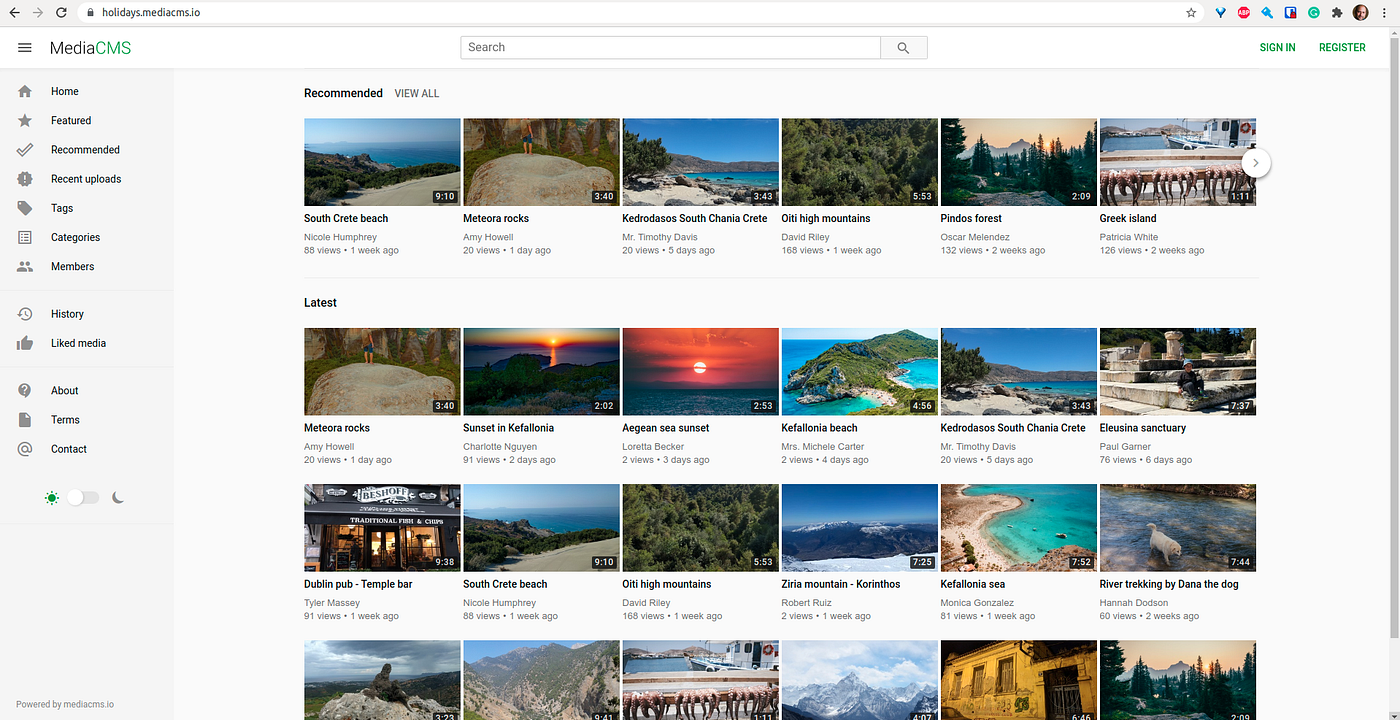
MediaCMS is a full-featured, multi-purpose media management system that supports videos, audio, images, and documents, making it extremely flexible for different kinds of projects. The system includes video transcoding, adaptive bitrate streaming, subtitle management, playlists, and a modern React-based interface that feels like a commercial platform. Being built on Django also makes it easy to scale, customize, or integrate with external systems through APIs, which is ideal for developers and companies planning long-term infrastructure.
Another advantage of MediaCMS is that it supports both single-author setups and multi-user communities. You can keep registration closed so only your team uploads content, or you can open it to the public and create a platform similar to YouTube where multiple users contribute. Its role-based access system ensures that creators, editors, moderators, and administrators can each have exactly the permissions they need. This flexibility makes MediaCMS a great choice for creators, schools, internal company knowledge platforms, and any project requiring strong control over media content.
PeerTube
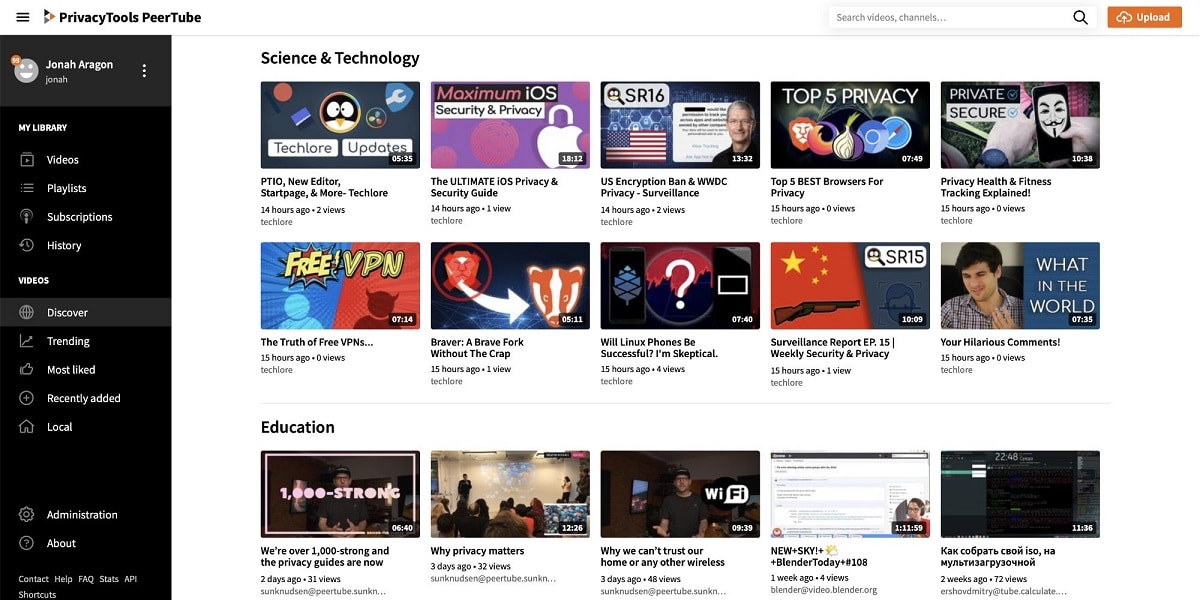
PeerTube is built around decentralization, meaning it doesn’t rely on one central server or company to operate. Instead, anyone can run their own server (called an “instance”), and these servers interconnect through the ActivityPub protocol. This creates a network of platforms that share videos, users, and communities, all without depending on a single corporation. This federated design makes PeerTube highly resilient, censorship-resistant, and capable of handling massive audiences without overwhelming one server.
For someone planning a public community or a platform that values freedom and digital independence, PeerTube stands out as one of the most purposeful video-sharing solutions. Its federation system allows small communities, classrooms, clubs, or interest groups to stay independent while still connecting to a wider ecosystem. PeerTube works best for projects where community involvement, decentralization, data independence, and openness are more important than highly polished commercial design.
Owncast

Owncast is designed specifically for live streaming, offering a self-hosted alternative to Twitch or YouTube Live. What makes it appealing is that you maintain complete control over your content, viewer data, and streaming environment. Owncast includes built-in chat, viewer statistics, moderation tools, customizable UI components, and stream quality adjustments that make it suitable for creators who need reliable real-time content delivery. You can host anything from gaming streams to talk shows, webinars, or behind-the-scenes events.
Because it is lightweight and easy to customize, Owncast fits creators who want to build a direct connection with their audience without the rules, ads, and algorithms of larger platforms. Its design encourages small communities to grow organically, allowing you to experiment with branding, features, and integrations at your own pace. If your project is centered on real-time interaction rather than traditional uploads, Owncast is one of the strongest and most user-friendly open-source options available.
2. Audio-Focused Media CMS
AzuraCast
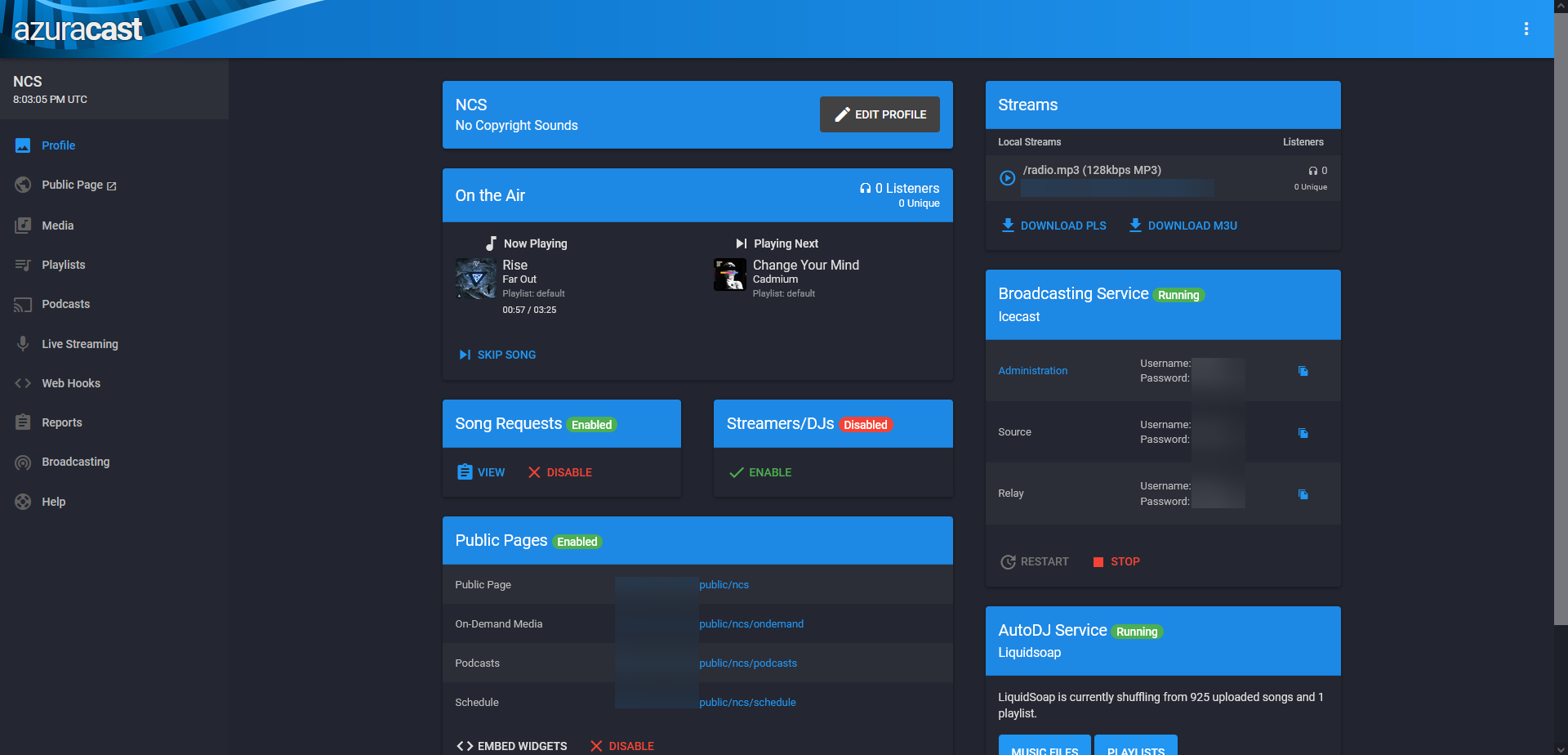
AzuraCast is a robust audio management system built for internet radio stations, podcasters, and anyone who wants to broadcast audio content 24/7. The platform includes automated playlist scheduling, DJ account management, on-demand podcast publishing, live broadcasting support, and built-in analytics that help creators understand listenership trends. Its interface is practical and easy to navigate, even for people who aren’t technically experienced, making it accessible for small radio teams or content creators looking to build their own broadcasting environment.
Beyond streaming capabilities, AzuraCast prevails at centralizing large audio libraries in a structured way. It automatically handles metadata, file organization, and content rotation so stations can operate smoothly without constant manual input. Because it’s open-source and self-hosted, organizations maintain ownership of listener data and complete control of their broadcast environment. This makes AzuraCast ideal for local radio groups, podcast studios, online radio communities, and educational institutions that want a reliable, customizable audio platform.
Koel
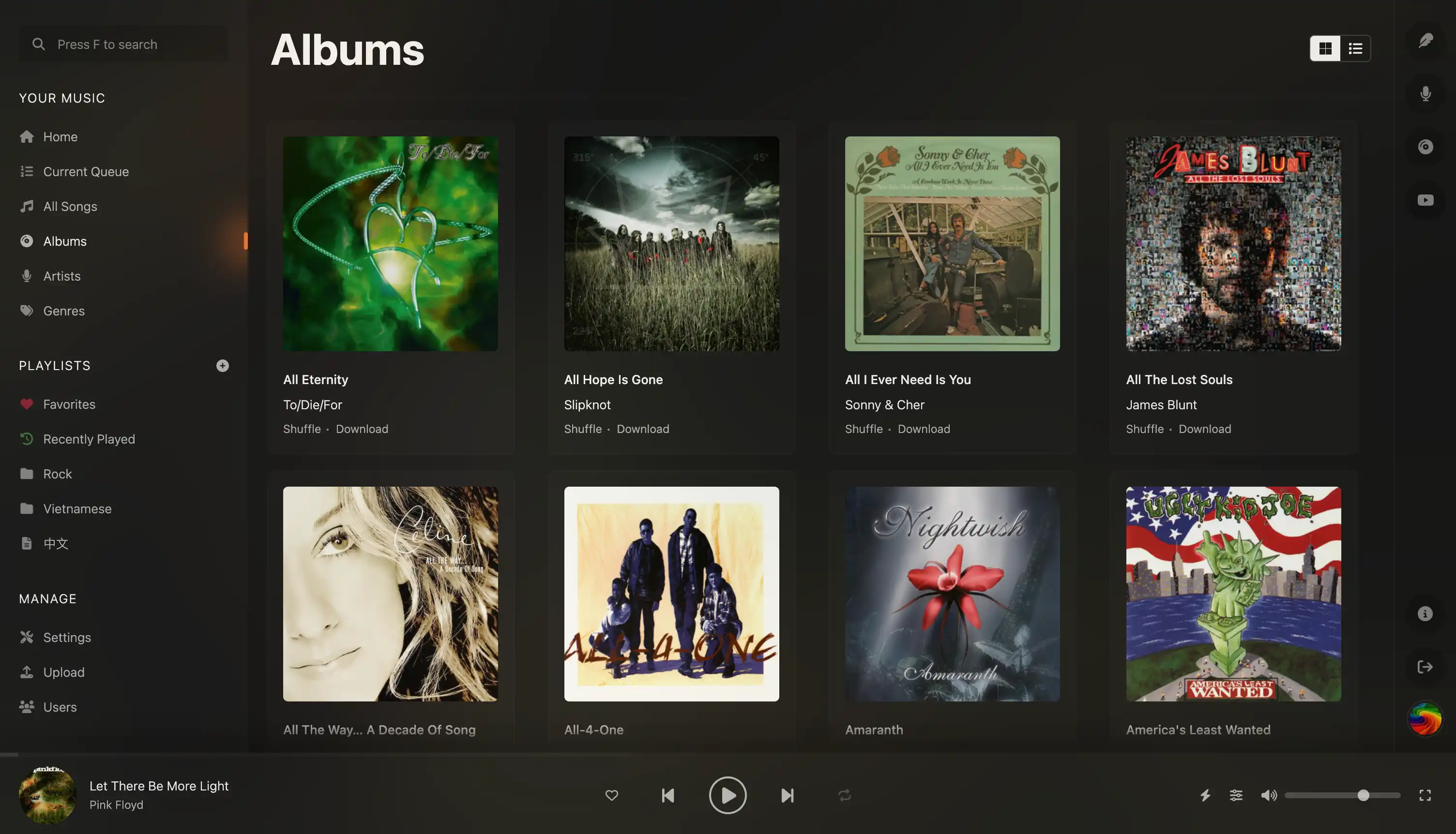
Koel is a personal music streaming platform designed for users who want a self-hosted alternative to cloud music services. It offers a clean, modern interface similar to mainstream players, making it feel familiar right away. Koel focuses on simplicity, presenting your music collection with album art, artist pages, playlists, and a quick-search system that keeps large libraries easy to navigate. It is ideal for people who simply want to enjoy their music collection anywhere without dealing with subscription services or storage limits.
From a technical perspective, Koel is lightweight, stable, and easy to deploy on shared hosting, VPS, or personal servers. It integrates smoothly with mobile clients and offers API access for developers who want to extend it or integrate it into personal digital ecosystems. Koel is perfect for users who want ownership, privacy, and convenience without the complexity of a professional radio or music-sharing community platform. Its focus on personal listening makes it a great choice for individuals with large private collections.
Funkwhale
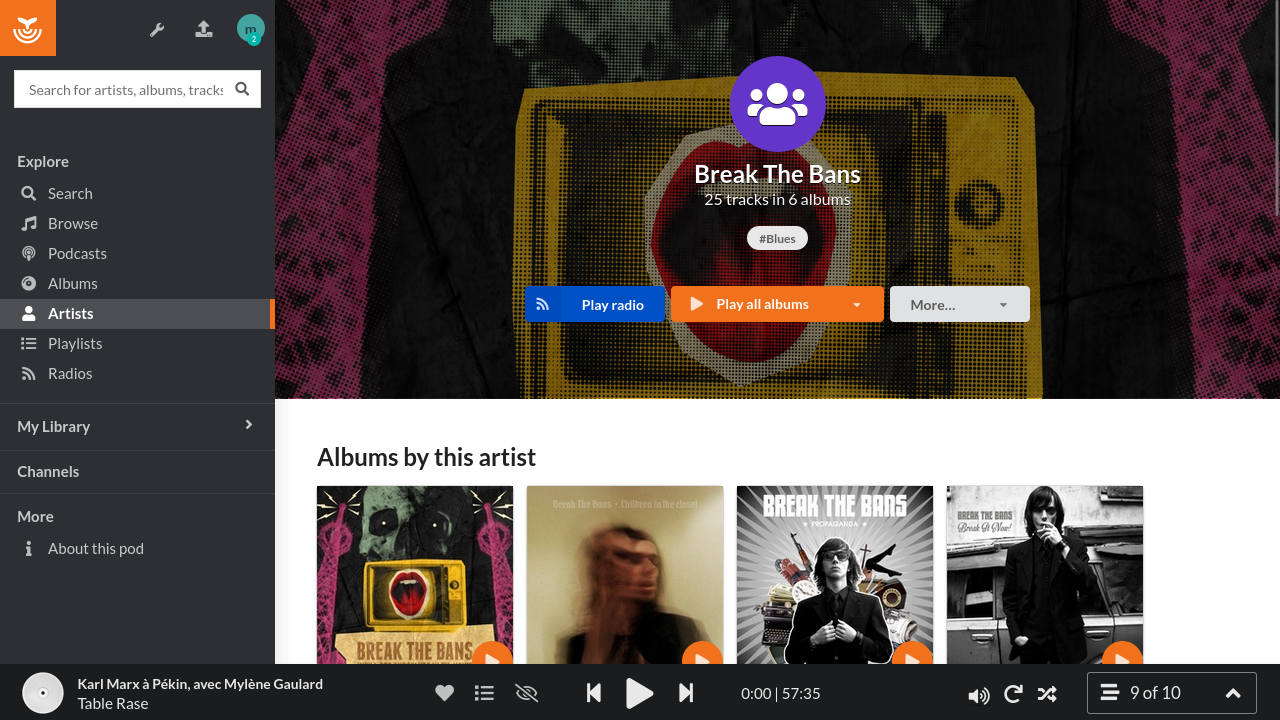
Funkwhale is a decentralized audio platform that empowers communities to share music, podcasts, and audio files in a federated network. By using ActivityPub, it can interact with other platforms in the Fediverse, making it possible to create interconnected audio communities that collaborate and exchange content. This decentralized approach removes single points of failure and promotes freedom, allowing creators and listeners to connect across different servers without belonging to just one platform.
Unlike simple music players, Funkwhale is built for group-driven activity. Users can upload content, create collaborative playlists, follow each other, and interact socially around audio media. This makes it a strong choice for music groups, podcast collectives, community radio networks, or niche audio communities that want their own independent space while still being part of a bigger network. Funkwhale shines in environments where collaboration, community ownership, and openness are part of the project’s core values.
3. Image-Focused CMS (Photo Galleries & Archives)
PhotoPrism
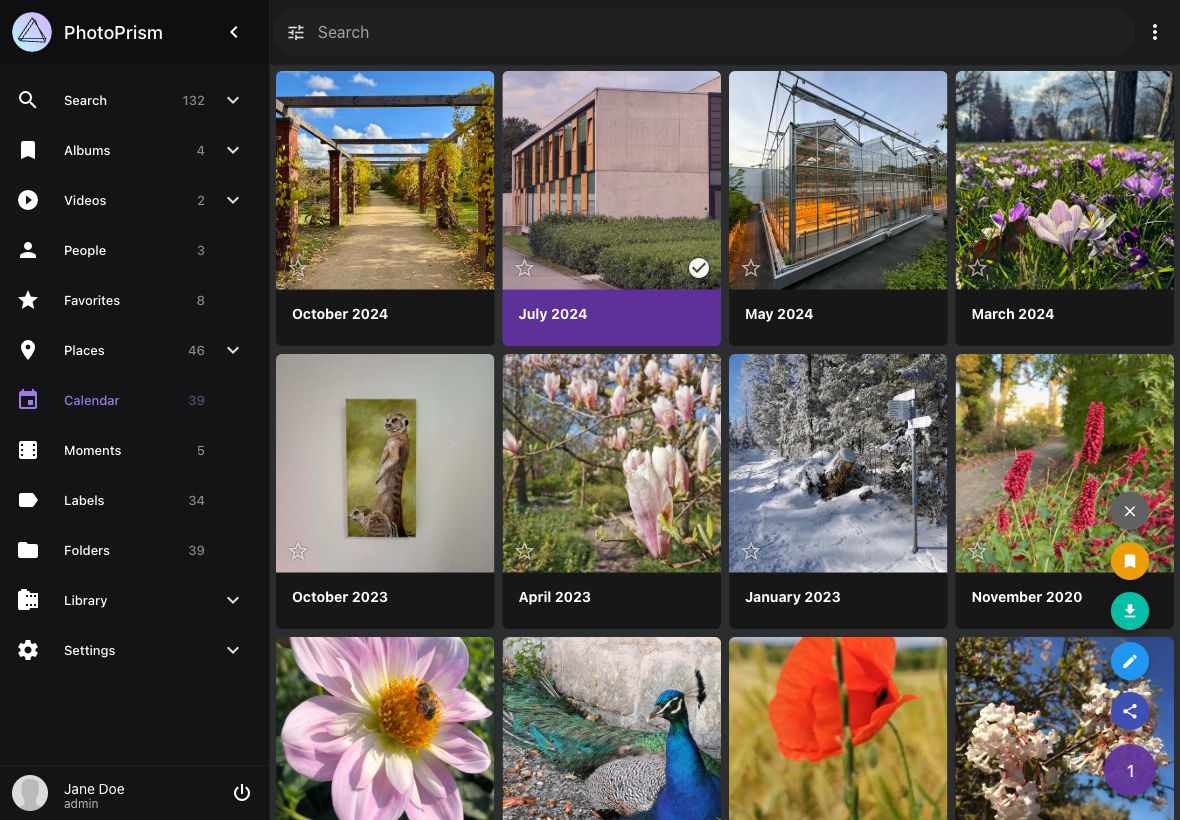
PhotoPrism is a powerful AI-driven photo management system designed to simplify large image collections. It uses machine learning to automatically categorize photos by objects, faces, colors, locations, and other metadata, making it incredibly efficient for users who struggle with organizing thousands of files. Its interface is polished and responsive, offering a browsing experience that rivals premium cloud platforms while remaining fully self-hosted for maximum privacy and control.
Because of its indexing capabilities, PhotoPrism is ideal for photographers, media agencies, or families with extensive digital archives. It supports RAW files, albums, private sharing, and multi-device synchronization through external storage providers. The platform is particularly valuable for teams that need detailed search capabilities and robust long-term organization. Over time, PhotoPrism becomes more accurate in its classifications, evolving with your library and creating a highly searchable visual archive.
Lychee
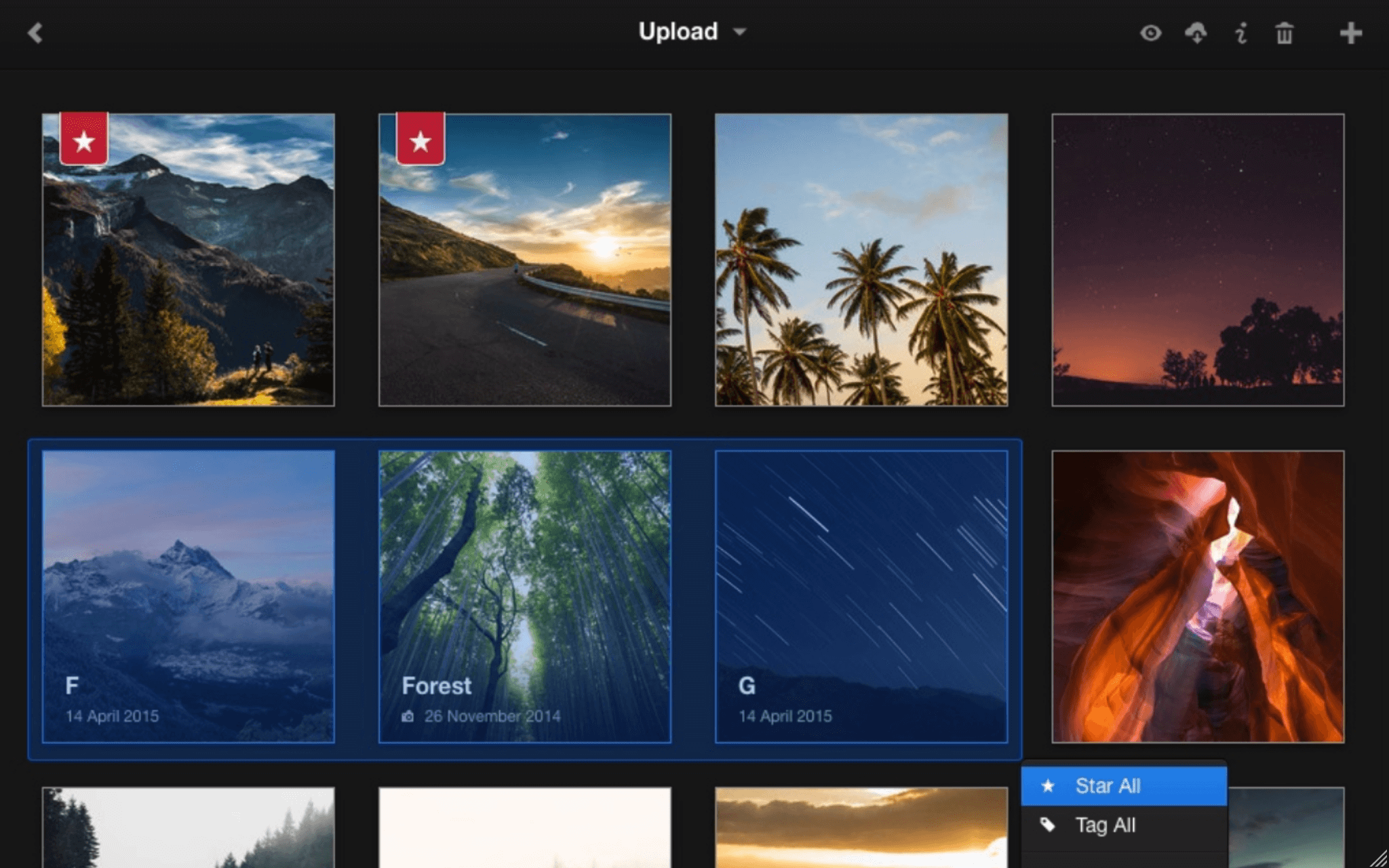
Lychee is a lightweight and beautifully designed photo gallery system that prioritizes simplicity without sacrificing elegance. It lets users upload, organize, and share images with a clean interface that works wonderfully on both desktop and mobile. Because it doesn’t try to do everything, Lychee stays fast and efficient, making it perfect for photographers who want an easy way to present their work without navigating a complex system.
For personal websites, portfolios, client galleries, or small teams, Lychee works exceptionally well. It supports password-protected albums, drag-and-drop organization, and direct sharing links, giving creators complete control over how their work is viewed. While it doesn’t include AI-powered features like PhotoPrism, its minimal approach makes it easy to maintain and deploy, which is a huge advantage for creators who only need a clean, polished platform for presenting visuals.
Piwigo
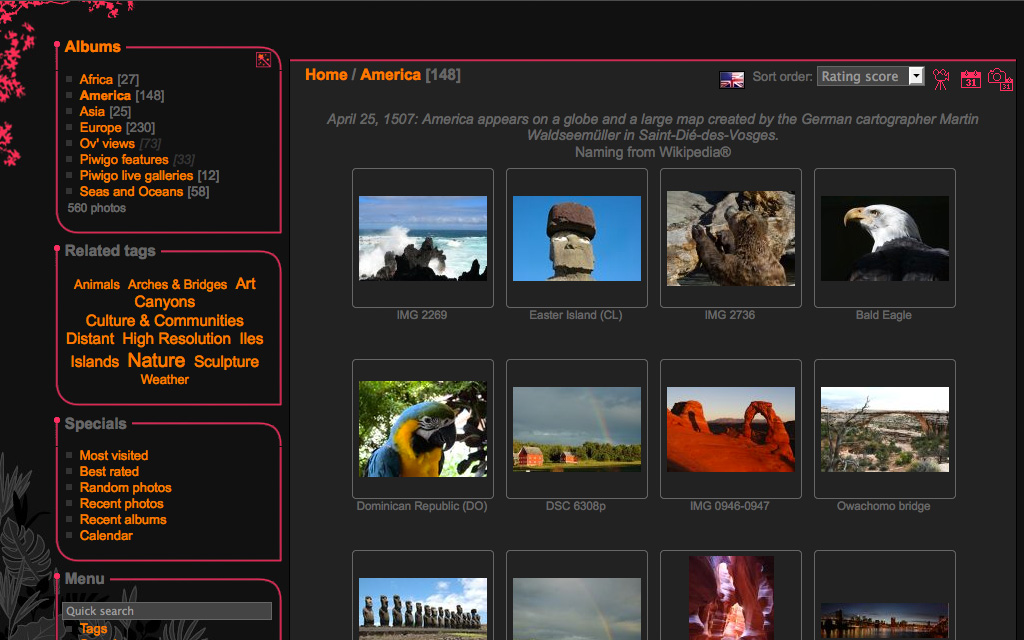
Piwigo is one of the most established open-source photo gallery platforms, used by organizations, museums, and photographers for more than a decade. It is built to manage extremely large collections, making it suitable for archives with thousands or even millions of images. Piwigo also includes a rich plugin ecosystem, allowing users to extend functionality with tools for tagging, theming, metadata handling, user permissions, and more.
Because of its flexibility, Piwigo is especially useful for professional and institutional environments. It supports multi-user management with fine-grained permissions, making it a strong choice for collaborative settings where different teams need different levels of access. Organizations that depend on long-term archiving appreciate its stability, community support, and ability to handle complex workflows. Piwigo remains one of the most mature choices for anyone managing a photo-centric project.
4. Multi-Media CMS (Video, Audio, Images & Documents)
ResourceSpace
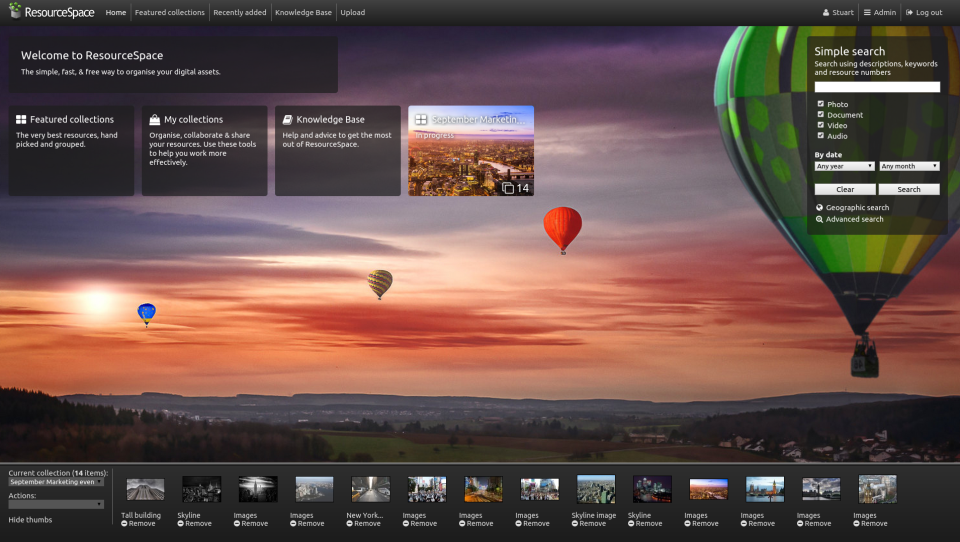
ResourceSpace is a comprehensive Digital Asset Management (DAM) system built for organizations that need structured, professional handling of media files. It supports videos, photos, documents, and audio files, providing detailed metadata tools, version control, permission layers, and advanced search capabilities. Because it focuses on professional workflows, it becomes a centralized hub where different departments or team members can upload, tag, and retrieve assets with accuracy and consistency.
ResourceSpace is widely used by museums, NGOs, marketing teams, and companies managing large media archives. It offers strong permission management, making it suitable for collaborative projects where workflows must remain secure and organized. The platform excels in environments that require long-term digital preservation and dependable internal structure. With its enterprise-grade features and reliability, ResourceSpace remains a top pick for companies and organizations that need more than a simple gallery or video manager.
Pimcore
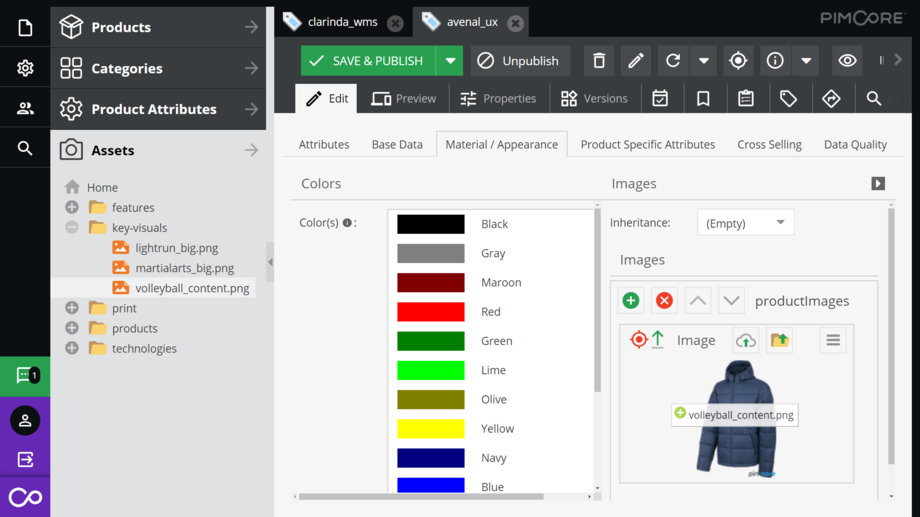
Pimcore is far more than a CMS, it is a unified digital platform that combines content management, digital asset management, product data management, and APIs into one system. This makes it incredibly powerful for businesses that need a foundation for multiple digital operations. With Pimcore, you can manage videos, photos, documents, catalogs, product data, and website content all within one interface. Its flexibility makes it suitable for enterprise-level digital ecosystems that require heavy customization.
This platform is ideal for companies that want to manage many types of digital assets across different departments while keeping everything consistent and centralized. Developers appreciate Pimcore because it offers APIs, integration options, and customization opportunities that allow it to adapt to complex workflows. If you need a system that unifies multiple digital functions such as asset management, ecommerce, content delivery, and more, Pimcore is one of the most complete open-source platforms available today.
Final Thoughts: Choosing the Right Media CMS
Every platform in this list solves a different kind of media problem, which means the best choice depends on your vision. If you plan to build a YouTube-like community platform, MediaCMS and PeerTube are strong and flexible. For audio-first projects, AzuraCast or Funkwhale offer the best specialized features. When dealing with large photo collections, PhotoPrism or Piwigo provide powerful organizational tools. And for businesses that need everything in one system, ResourceSpace or Pimcore deliver long-term structure and professional workflow management.


![Mastering #[AutowireIterator] and #[AutowireLocator] in Symfony — The Modern, YAML-Free Way](https://i3.wp.com/www.obrien.com.au/wp-content/uploads/2020/07/Copy-of-20180219_LaserElectrical_Promotional_064-800x450.jpg?w=300&resize=300,300&ssl=1 "Mastering #[AutowireIterator] and #[AutowireLocator] in Symfony — The Modern, YAML-Free Way")